quicksearch


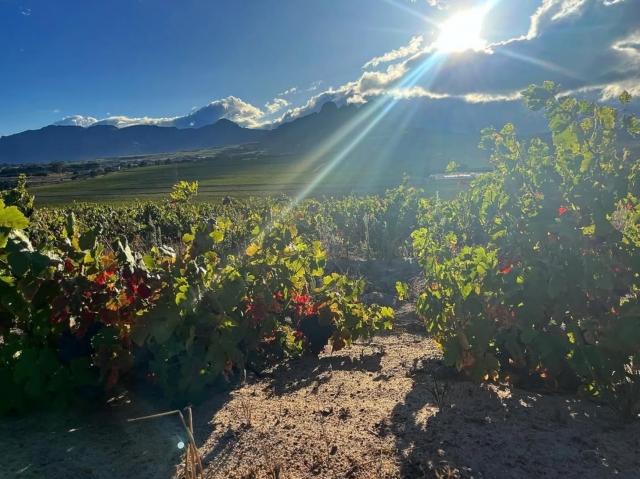
It’s easy to be charmed by the characterfulness of humble Cinsault.
Widely planted across Southern France, it’s well adapted to heat and capable of high yields, making it more a workhorse than thoroughbred. Cinsault (aka Cinsaut) has long been a blending partner here, and a historically favoured grape alongside Syrah, Grenache, and Mourvèdre in Provence, Languedoc, and the Southern Rhône.
It was introduced to South Africa's Western Cape in the 1880s, and was once the most widely planted red grape in the country (formerly known locally as Hermitage). It became the parent to Pinotage, born in the University of Stellenbosch in the 1920's when Cinsault was crossed with Pinot Noir. Also once a main blending partner in SA, the grape has seen a complete Renaissance in the hands of today's winemakers, and thanks to the Old Vine Project, the country is preserving ancient, dry-farmed Cinsault blocks, some dating as far back as 1900.
The first plantings of Cinsault in Chile date back to the 1930s, where it found a perfect home in the southern reaches of the Itata Valley, easily adapting to the cooling marine breezes, and decomposed granite, quartz, limestone, and volcanic laced soils. Most vines are dry-farmed, a trait the grape can handle with ease. It has also transported with great success to the United States (Lodi, Texas, Arizona), Australia (McLaren Vale), Lebanon, and North Africa (Morocco, Algeria, and Tunisia) amongst other regions.
In blends, Cinsault brings perfume and lift, with a finely rasped pink and white peppercorn spice. These lovely, lighter, fresher perfumed qualities are readily apparent when the grape is vinified solo. At higher yields, this is a delightful and gulpable fresh red, ready to be chilled and enjoyed, abundantly. At lower yields, something more serious emerges, with stoniness, wild raspberry, and wild herbs interwoven amongst the perfumed lightness.
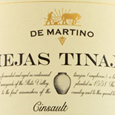
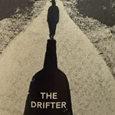
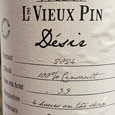
We've tasted quite a few characterful Cinsaults recently, and here are some favourite soloists, or headliners in blends. Cin Cin :