quicksearch


There are moments in a wine journey that arrive before you have the vocabulary to name them.
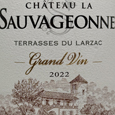
Thirteen years ago, I walked up a hillside at Château La Sauvageonne in Terrasses du Larzac, Languedoc, my first visit to the region. I was working for a wine importer in South Korea, and the trip was a sales incentive, a reward for the team. For me, the marketing person, it turned out to be something more. The soil was red, dusty, and warm underfoot. The air carried wild herbs, lavender, and something resinous I would later learn to call garrigue. Gérard Bertrand had just acquired the estate, and the appellation, now one of the region's most coveted, was on the cusp of earning that recognition.
That evening, further south near Narbonne at Château l'Hospitalet, we sat down to fresh seafood under an open sky, a jazz concert drifting through the warm, salt-tinged air off the Mediterranean. I was too green to grasp the significance of any of it. But something was quietly imprinting itself on me: the untranslatable French idea of terroir, the deep sense of place that a landscape presses into a wine and, it turns out, into the people who visit it.
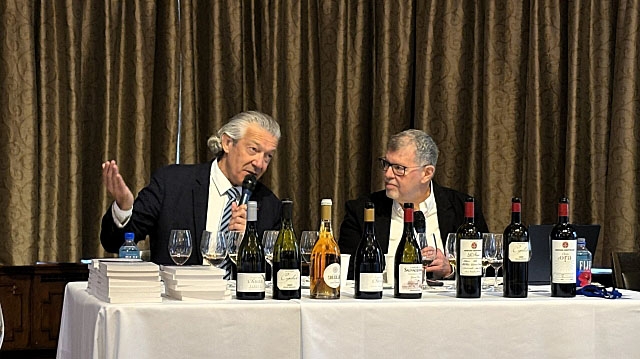
Last month, at the Vancouver Club during the Vancouver International Wine Festival, I finally met the man who has spent his life trying to explain exactly that feeling.
A Legacy Born in Tragedy
Gérard Bertrand harvested his first grapes at age ten at Château de Villemajou, working beside his father Georges, who had made it his mission to reveal the great, undervalued terroir of the Languedoc. When Georges died and Gérard was just twenty-two, he inherited not only the estate but the dream. He has never stopped running with it. Fifty vintages on, he oversees seventeen estates across the Languedoc, a portfolio that has grown from three export markets in 1987 to 175 countries today. He calls it "more than a career — a declaration of faith in my region." In his book Multidimensional Wine, he goes further: "Winegrowing isn't a job but a leap of faith. Making one's wine is the ultimate act of faith. One must understand its meaning to elevate it, be brave enough to reveal it, and embody it."
The Road to Biodynamics
Growing up in a small village in the heart of Corbières, rugby was everything. "A school of life", as Bertrand describes it. When a persistent liver issue in his early twenties defied conventional medicine, he turned to a homeopath whose holistic approach, tracing inherited trauma across generations, healed him in three months and opened his mind to the idea of interconnected systems. When he later encountered Rudolf Steiner's lectures on biodynamic agriculture, the connection was immediate. "Biodynamic principles are homeopathy for plants, by plants," he writes in the book. He began experimenting on four acres. Today, nearly 1,000 hectares are certified biodynamic.
That shift, he insists, runs deeper than farming technique: "The power of intent of the winegrower, their understanding of ecosystems, the spiritual dimension, and emotional intelligence create the necessary conditions for this unique experience."
What Biodynamics Means
The philosophy can sound abstract, but Bertrand grounds it in measurable reality. French INRAE (the National Research Institute for Agriculture, Food and Environment) research tells a striking story: conventional soils hold around 1,400 different micro-organisms; biodynamic soils contain over 47,000 species, thirty times more life beneath the surface. That diversity, he argues, changes everything above it.
The most critical battlefield is pH. Potassium is, in Bertrand's words, the enemy of wine. Being alkaline, it strips acidity and raises pH, making the fruit softer, flatter, and harder to work with. Biodynamic farming keeps potassium in check, preserving the acidity that gives wine its tension, its freshness, and its structure. As the climate pushes temperatures higher, that ability to hold the line becomes ever more consequential. The result, he says, shows up directly in the glass.
Biodynamic wines are not engineered for uniformity. They are made to reflect where and when they came from. As Bertrand puts it, "What happens in the glass of wine reflects what you can find and discover when you work in the vineyard." A great vintage should taste like a great vintage. A cool, precise year should feel different from a warm, generous one. That variation is not a flaw. The alternative, he implies, is a homogenous commodity that tastes the same regardless of year, place, or effort. And that, for Bertrand, would be a betrayal of everything terroir means.
One passage from the seminar has stayed with me: "The only thing you cannot change in this industry is the terroir. You can change grapes, you can change winemaking, you can change people, but if the terroir doesn't work, forget it. When I buy a property, I have to fall in love with the terroir. You have to feel the connection using your intuition, your admiration, your imagination."
The Art of Living — and the Party Maker
Bertrand's vision of wine extends well beyond the cellar. At Château l'Hospitalet near Narbonne, facing the Mediterranean, he has built one of France's great wine destinations: a five-star hotel, a Michelin starred restaurant, and an annual five day jazz festival now in its twenty-third year.
"I have two jobs," he said in Vancouver. "I am a winemaker and I am a party maker. My job is to make the link between wine, gastronomy, culture, art, music and people. Because when you love wine, you have a passion for painting, for music, you are open-minded, more sensitive. That is why it is so interesting to be a member of the community of wine lovers."
What We Leave Behind
Biodynamics remains hard to grasp and is often misunderstood, but at its heart, it serves a simple purpose: to reveal terroir, the one thing you cannot change, and to pass it on to the next generation intact. A continuum of knowledge, of care, of faith in the land. Bertrand understood this early. His vision, formed in his twenties, was to leave a better planet for those who come after him. It is fitting, then, that I am writing this on Earth Day.
His closing words in Vancouver felt like both a toast and a manifesto:
"We need more positive emotion in this world. Wine at its best delivers exactly that - bringing people together, teaching us to feel and to share. That is what wine civilization means. And that is what we have to preserve and save."
Recent notes from GOW