quicksearch


The top Crafted in British Columbia wines reviewed as part of the WineAlign National Wine Awards of Canada were released last week.
You can see the full list of wines by category at winealign.com. Here at Gismondi on Wine we wanted to highlight the top replacement wines that we've tasted so far this year. You can see our full list of recommendations at the bottom of this article.
As a quick refresher: British Columbia’s cold snap in January 2024 resulted in an estimated 97% crop loss that year in the Okanagan and Similkameen Valleys. It necessitated a look abroad for grapes to ensure the survival and continuity of the province’s wine industry. The resulting wines temporarily “replaced” BC VQA wines on retail shelves and wine lists.
You can read last year’s article for the full background. Importantly, a lot has changed over the past year. Perhaps most significantly, vines rebounded in a way that no one anticipated. The expectation was that crop levels would be roughly half of average, as they slowly recovered from winter damage. The reality was much different. For many wineries, the 2025 vintage will go down as their largest harvest on record. Crop levels were extraordinarily high across much of the Okanagan and Similkameen, requiring careful management to retain quality in an otherwise exceptional growing season.
In some cases, supply outpaced demand, and for the first time in years there was fruit that went unsold. It was a drastic swing from the previous year, which made the extension of the replacement program in September 2025 controversial. By this time, it was clear that there was a large crop hanging throughout both valleys.
As a result, few wineries outside of the so-called “big three” sourced non-B.C. fruit. There was no need. But it’s important to note that grape availability varied significantly by variety. So, while there was no shortage of Cabernet Franc, buoyed by its cold hardiness, the same was not true for in-demand (and more cold-sensitive) varieties like Pinot Gris.
That explains the relatively small number of replacement wines entered from the 2025 vintage. The balance comes from the 2024 vintage, representing the next tranche of releases following the initial spring releases that were reviewed last year. Or, put another way, this represents some of the best of the replacement wines.
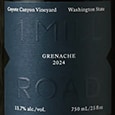
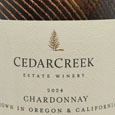
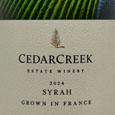
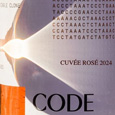
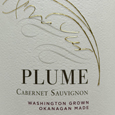
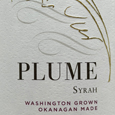
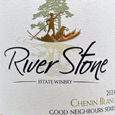
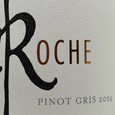
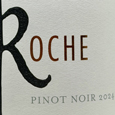
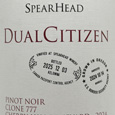
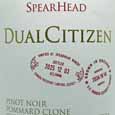
I’ve been on a soapbox for a while now talking about the quality of the replacement wines released over the past six months. It speaks to the original promise of these wines: some of Canada’s top winemakers going to some of the world’s top wine regions to source and make extraordinary wines, making the best of horrible circumstances. This year’s entries speak to the breadth of where the fruit was sourced from, including Oregon’s Willamette Valley, Washington State, France, and New Zealand.
What stands out is not just the quality but the superb value. If you were buying these wines in Washington or Oregon, the pricing would look very different – and that’s ignoring the weak Canadian dollar. That we have wines of this quality at these prices should excite all wine enthusiasts – both the trade and consumers.
But it feels like these wines continue to be overlooked. B.C. wineries are celebrating the return of B.C. fruit, which then makes it awkward to turn around and promote replacement wines. Then, of course, we have the continued challenges around promoting wines made from American fruit. I sense that consumers understand the impetus for these wines – at least once they’re given a proper explanation – even if they’re not necessarily stocking up like they would for their B.C. equivalents. Interestingly, the trade has been more stubborn, in some cases grandstanding without actually standing for anything.
My perspective is cut and dried: some fantastic replacement wines are well worth buying – and buying in volume at these prices. (I should note that the Nationals only includes a small sample of what’s been released so far this year.) This program was a lifeline for B.C. wineries, and buying these wines supports them more than anyone else. And, at the end of the day, tasting these wines alongside their B.C. counterparts underscores the distinctiveness of wines from the Okanagan and Similkameen, and that they too are world-class in calibre.