quicksearch


Fortified wines have seen declining global consumption for decades, and Sherry has not been spared.
As drinkers increasingly gravitate toward lower alcohol, fresher, crisper styles, traditional fortified categories have struggled to hold their ground. In response, Jerez is not standing still. Across the region, producers and regulators are rethinking long-held rules, expanding geographical boundaries, and redefining what sherry can be for a new generation of drinkers.
From Triangle to Decagon
The Jerez-Xérès-Sherry DO was formally established in 1933, becoming the first appellation of origin in Spain. One town, one wine, multiple names shaped by centuries of trade, conquest, and translation. It began as Ceret, became Seris, then Jerez. The French spell it Xérès. The English transformed it into Sherry. The historic heart of Sherry production and aging has long centred on Jerez de la Frontera, Sanlúcar de Barrameda, and El Puerto de Santa María, the trio known as the Sherry Triangle. Today, that core has expanded to include seven neighbouring towns turning the triangle into a ten-pointed shape.
Each town within the original triangle is known for its own microclimate, subtle shifts in humidity, and distinct yeast populations that influence the growth of flor and the way the wines age. Expanding the map inevitably opens the door to new expressions of sherry. The question now is whether these additional towns will carve out clear identities in the glass, or gently blur the lines that once defined the region.
Low and Raw
Traditionally, Sherry has been defined as a fortified wine. With recent changes, however, producers can choose to forgo fortification if the base wine naturally reaches the required minimum alcohol level. That threshold has also been lowered from 15% to 14%, providing entry to create lighter styles. At the same time, the possible creation of the new DO Vinos de Albariza, designed for unfortified wines from the region, signals a broader shift. Though it is still a few years away from full legal implementation, it promises new opportunities for Jerez to produce lower-alcohol, fresher table wines from its local grape varieties.
These changes in the region are clearly creating exciting new opportunities, and the potential for innovation feels promising. Yet, my recent trip to Jerez and Bodegas Tradición reminded me that keeping tradition alive is just as powerful a way to secure the future.
Very Old, Very Rare: Inside Bodegas Tradición
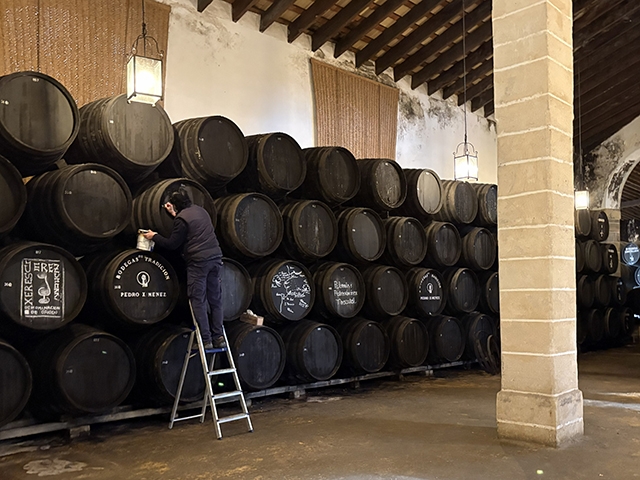
Bodegas Tradición may be small – producing just 25,000 bottles annually with nine employees – but it stands as a model of what it means to remain true to Jerez tradition while meeting today’s challenges. Founded in 1998 by Joaquín Rivero, a descendant of the Rivero family that ran Bodega CZ in 1650, the bodega was born from a desire to recover his family’s historical ties to winemaking. Alongside Ignacio López de Carrezosa and Javier Domecq, Rivero restored a historic cellar in the heart of Jerez and began selecting wines from exceptional, nearly forgotten soleras, creating top-quality very old and rare Sherries.
Today, Bodegas Tradición dedicates itself to the production of VOS (Very Old Sherry) and VORS (Very Old and Rare Sherry), wines that represent a mere 0.2% of the region’s production and demand decades of disciplined solera aging and uncompromising cellar management. Rather than diversifying into broader commercial styles, the house has chosen to concentrate on the slowest, most exacting expression of Jerez. Each bottle is hand-labeled and individually numbered, a mark of meticulous care.
As Joaquín Rivero’s daughter, Helena Rivero, who now leads the winery, writes: “To drink wines from Bodegas Tradición is to drink time. It is to appreciate quality, respect its processes, and celebrate tradition.” Standing in the cellar at 93 percent humidity, feeling the poniente – the Atlantic wind that brings the moisture essential for flor and aging – those words resonate deeply. Tasting their 100-year-old Amontillado is indeed like drinking time itself: intensified salinity, profound umami, and a depth that only patience, discipline, and decades of dedication can create.
Below are some of the wines I tasted:
Fino Tradición
Made from 100% Palomino Fino and aged under flor in old American oak casks for 10 to 12 years, this is not your typical Fino. Its deeper golden straw colour immediately sets it apart. On the nose, pronounced acetaldehyde notes of bruised apple mingle with bready aromas, layered with almond and a subtle hint of smoke. As the flor population diminishes toward the end of the ageing process, the wine takes on greater depth and complexity. It recalls a Manzanilla Pasada in character – sitting somewhere between a classic Fino and an Amontillado rather than the light, fresh style many associate with the category. 91 points
Oloroso Tradición VORS
Aged oxidatively for more than 30 years in American oak casks through the traditional solera system, this Oloroso shows remarkable depth and composure. Luscious and rounded yet firmly structured, it is intensely textural. Though analytically dry at just 4 g/L of residual sugar, it gives an impression of higher sweetness, with concentrated flavours of caramel and toffee layered over roasted nuts and warm spice. 93 points
Amontillado Tradición VORS
This Amontillado undergoes an initial phase of biological ageing under flor for around 10 years, followed by more than 20 years of oxidative ageing. With glycerol largely consumed during the biological stage, the palate is strikingly dry, linear, and precise. Layers of sea salt, dried hay, light smoke, bergamot, almond, and pecan nuttiness unfold gradually, carried by a focused saline profile and a long, resonant finish. Seamless integration of the alcohol. 95 points
Palo Cortado Tradición VORS
This Palo Cortado is crafted from a special selection of delicate base wines made from free-run juice. It undergoes little to no biological ageing under flor before spending more than 30 years ageing oxidatively in American oak casks. Stylistically, it leans closer to Oloroso than Amontillado in its roundness and structure, yet it carries a finer, more polished texture. Highly complex aromas of dried apricot, toffee, and walnut unfold on the nose, lifted by a saline edge and a gently spicy, persistent finish. 94 points
When I was choosing a wine destination for an extended family trip from London, I’ll admit my priorities were simple. I wanted warmth to escape from the Canadian winter. Jerez, on Spain’s southern edge, seemed like a safe bet. We knew winter is its dampest season and expected some rain, but we arrived to downpours and grey skies – two straight weeks of storms, a rare sight even for the locals. And yet, that isn’t what I remember most. I remember orange trees heavy with fruit in February, their scent sharp in the damp air. I remember sudden breaks of sunshine lighting up whitewashed walls. Most of all, I remember the people. The warmth we found there had little to do with the weather and everything to do with the generosity, quiet radiance, and passionate dedication to their craft of those who call Jerez home – a spirit that left me confident in a bright future for both the region and its wines.