quicksearch



After a couple of challenging vintages, the Champenois sighed in collective relief with harvest 2025.
Not only was it the earliest harvest ever recorded, quality has been reported as excellent, and healthy.
Growers had barely made it back from summer holidays when harvest began in some villages on August 20, the exact date that the Comité Champagne (CIVC) announced picking can commence. It was a full 5 days earlier than their predicted harvest start back in late July, the result of light rains in July followed by an early August heatwave, ratcheting up ripening. Cellarmaster Jean-Baptiste Lécaillon of Champagne Roederer called 2025 a “Formula One vintage, fast and intense.” He also noted that unlike the mildew ridden 2024, one of the worst vintages on record, “This year has been easy, with no frost, a classic bud break, then a dry April, May and June, so there has been no mildew.” From the caretaker and overseer of the largest organically certified vineyards in Champagne (with 135 hectares currently, and the rest of the maison’s 250 hectares in conversion), this is promising news. “Organic farming is easy,” and in 2025, “Everything is perfect.”
Everything, that is, except quantity. With vines still reeling from 2024, plus cooler weather during spring flowering, agronomical yields (vs CIVC-set commercial yields) were naturally lower. Chardonnay was affected the most, with its earlier flowering period than its red grape counterparts more affected by inclement spring. However, even Didier Gimonnet, known for his precise, chardonnay-centric Côtes des Blancs wines was not dismayed by the modest harvest. He reported “fewer clusters per vine and lower average weight” noting 2025 was “Our smallest harvest on Cramant, Chouilly, and Oger since 2003 (a year affected by frost).” But quality always trumps quantity. Gimonnet said the grapes harvested were of remarkable quality, “ultra-healthy grapes: not a single rotten berry, a guarantee of purity.”
At the annual general meeting of the Association Viticole Champenoise (AVC), the initial CIVC harvest data previewed a "vintage of a lifetime" potential. Let’s hope that helps boost Champagne sales worldwide. 2024’s total bottle sales were reported at 271.7 million bottles, a sinking low, and it appears this year will bottom that, around 268 million bottles. David Chatillon, the co-president of the CIVC, and president of the Union des Maisons de Champagne (UMC) warned that the 2026 forecast would be more of the same, reflective of the market's demand for Champagne (and most certainly feeling the effect of the US tarrifs).
Growing Champagne in Canada
All of the above places Canada in prime position to take a lead and advantage of a Champagne market eager for consumers. And the CIVC has noticed: in late 2024, they opened a Canadian Champagne Bureau, a move I have been hoping and asking for over the past decade+, bringing the international Bureaux count to 11. While the global Champagne market experienced a 9.2% decline in volume in 2024, Canada was noted by the CIVC as one of the new markets showing growth. We are the 10th largest export market for Champagne, with over 2.8 million bottles exported annually. The Canadian Bureau is rightfully headquartered in Montreal, with a secondary office in Toronto. I’ve led a few product consultant training sessions for the BCLS and LCBO, to start to ramp up monopoly education, and there will be wider Champagne training opportunities for trade across Canada in 2026 – stay tuned!
This Report
This Annual, now 9 years in, truly is a labour of love, and my personal directive to help grow Champagne knowledge and culture. Champagne was my first Aha! Wine 20+ years ago, and though I’ve travelled and written about the wine world, it is the region I’m most passionate about. I completed the Champagne Master Level through the Wine Scholar Guild, and am a Champagne judge for Decanter World Wine Awards. I brought Grower Champagne Month to Canada for a couple years’ run (sadly squashed by Covid), and it makes up the majority of wines that I drink. You’ll see in my notes I aim to give the background of producer, and place, naming the villages and subregions where known, and detailing the winemaking and aging, disgorge and dosage. I hope it helps you, reader, understand more about these special wines of people and place, why they taste as they do, and help shape how you purchase and enjoy Champagne (enthusiastically, I hope).
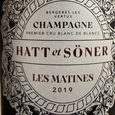
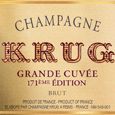
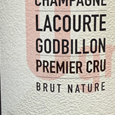
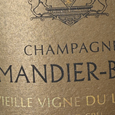
These are notes on 110 Champagnes tasted in 2025, listed in alphabetical order. For other sparkling wines, visit The Sparkling Report 2025-2026, with 120+ more reviews.