quicksearch


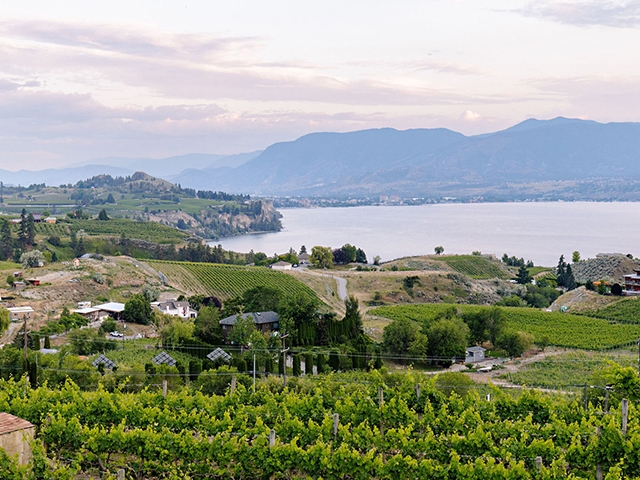
The Best of the Bench is back.
After a pause, the benchmark Naramata Bench's benchmark tasting is back, arriving with the return of BC fruit. Best of all, they chose our own Geoffrey Moss, who lives five minutes from the bench, to assess the wines. Here are his thoughts… -AG
Hosted by the Naramata Bench Wineries Association, the event allows member wineries to submit up to four wines for consideration, with the top 12 wines featured. This year, I tasted through just under 100 submissions over two days. It was a fun and informative tasting – and probably the easiest commute of my career, just 5 minutes down the road at Hillside Winery.
The full results are below, but a few general trends stood out to me. The first, and arguably the most exciting, is the return of BC fruit in the 2025 vintage. We’ve already covered 2025 at length here at Gismondi on Wine, and this tasting was a reminder of why you should be excited. Half of the wines on the list are new 2025 releases.
The diversity of the Naramata Bench is also evident in the list. Across the 12 wines, there is a broad range of styles and grape varieties. Hopefully, the idea that the Naramata Bench – or the Okanagan more broadly – needs a signature grape variety is long behind us. It simply doesn’t reflect the reality on the ground or in the glass, and the Bench’s diversity is certainly one of its strengths.
You can see it in the quality of riesling coming from a specialist like Four Shadows, represented twice over by the 2025 Riesling Classic ($26) and the 2025 Riesling Frizzante ($28). You see it in the Rhône varieties on the list, the Tightrope 2025 Viognier ($30) and the Terravista 2025 Marsanne ($33). Anyone who has followed Rhône varieties in the Okanagan knows they are among the best performers. What’s striking about these grapes on the Naramata Bench is their vibrancy and brightness — a slightly different expression than you might expect from the South Okanagan, yet every bit as delicious.
Rosé as a category also showed well. The generous 2025 vintage meant a lot of rosé was produced, a reflection of the higher yields seen up and down the valley. Two examples stood out from the tasting. The Three Sisters 2025 Signature Rosé ($27), a blend of pinot noir, cabernet franc, and gamay, is both fun and elegant. And one of my highlights was the Roche 2025 Artist Series Zweigelt Rosé ($27) — which, once again, speaks to the range of varieties planted across the Bench. It isn’t every day you come across a zweigelt rosé, let alone one with this concentration, depth, and complexity.
Chardonnay and pinot noir continue to perform well on the Bench. The former was led by the Deep Roots 2023 Reserve Chardonnay ($30), my top chardonnay of the tasting. Pinot noir was just as exciting and showed a diverse range of styles. The Modesta 2022 Estate Pinot Noir ($35) is a bright, lighter, sappier style that combines earthy savouriness with red cherry fruit. The Howling Bluff 2022 Pinot Noir ($26) leans further into juicy red berry fruit, with a crunchy drinkability. And the standout, for me, was the Little Engine 2022 Silver Pinot Noir ($47), which pairs sappy beetroot with dense, ripe fruit.
Being a small sub-GI also means that many wineries source a portion of their fruit from elsewhere. Laughing Stock is a good example, with a modest vineyard at the winery on the Bench, while most of its fruit comes from further south. That reach is reflected in its two wines here: the 2021 Market Bubbles ($40) and the 2023 Syrah ($45). It has been a remarkable two years for Laughing Stock, a winery that feels like it’s in the midst of a renaissance, thanks to winemaker Sandy Leier, who arrived ahead of the 2022 vintage. The wines have reached another level — from Best Performing Small Winery of the Year at the 2025 National Wine Awards of Canada to Winery of the Year at this year’s BC Wine Awards. (The 2023 Syrah was also named Wine of the Year.) If you’ve been meaning to revisit Laughing Stock, now is the time.
A note of caution: it’s difficult to draw generalizations or sweeping conclusions about the Naramata Bench from this tasting alone. The Naramata Bench Wineries Association doesn’t represent every winery on the Bench, and not all members submitted wines for this tasting. Nor does it account for all wines made from Bench fruit. Wines made from Naramata fruit are also produced by wineries further afield, including Meyer, Martin’s Lane, and CedarCreek, just to name a few.
What is impressive about the Best of the Bench is the range of wineries represented. You could use the list as a buying guide if you’re looking to explore the wines of the Naramata Bench. More so, I’d use it as a list of wineries to visit this summer if you’re going up and down Naramata Road. It’s a special place – not just because of its terroir, but also its sheer beauty.
The Best of the Bench 2026
Sparkling
White
- Four Shadows Riesling Classic 2025 — $26
- Tightrope Viognier 2025 — $30
- Terravista Marsanne 2025 — $33
- Deep Roots Reserve Chardonnay 2023 — $30
Rosé
Red